 OfficeSwap
What Is Office Hoteling? How It Works, Benefits and Hoteling Software

Office hoteling is a way of sharing workspace where people reserve a space for the days they'll be in, instead of having one assigned to them permanently. The name comes from hotels: you book, you use it, you leave, and the next person books it.
It became common as hybrid work meant that assigned desks and offices sat empty on the days people worked from home or travelled. Hoteling puts that space back to use.
How office hoteling works
- People choose their days. They say when they'll be in the office, usually a few days or weeks ahead.
- A space is assigned. Either they pick a specific desk or office, or the system assigns one that's free for those days.
- They use it, then release it. When the days are over, the space goes back into the pool.
Software makes this work at scale. A spreadsheet can handle a handful of spaces, but requests, cancellations and double bookings add up quickly. See OfficeSwap vs a spreadsheet for where each one fits.
Hoteling vs hot desking
The two are easy to mix up:
- Hot desking: nobody has an assigned space. You take any free desk when you arrive, usually without booking.
- Hoteling: you reserve a specific space in advance, so you know you have one before you leave home.
Hoteling is more predictable, which matters when spaces are limited or when people travel to another location. We compare the options in hot desking vs office sharing.
What about firms with private offices?
Hoteling was designed for open-plan desks. In a law, accounting, wealth management or engineering firm, many people have a private office they use for confidential calls and client meetings. They don't want to give it up, and moving into a shared bench isn't an option.
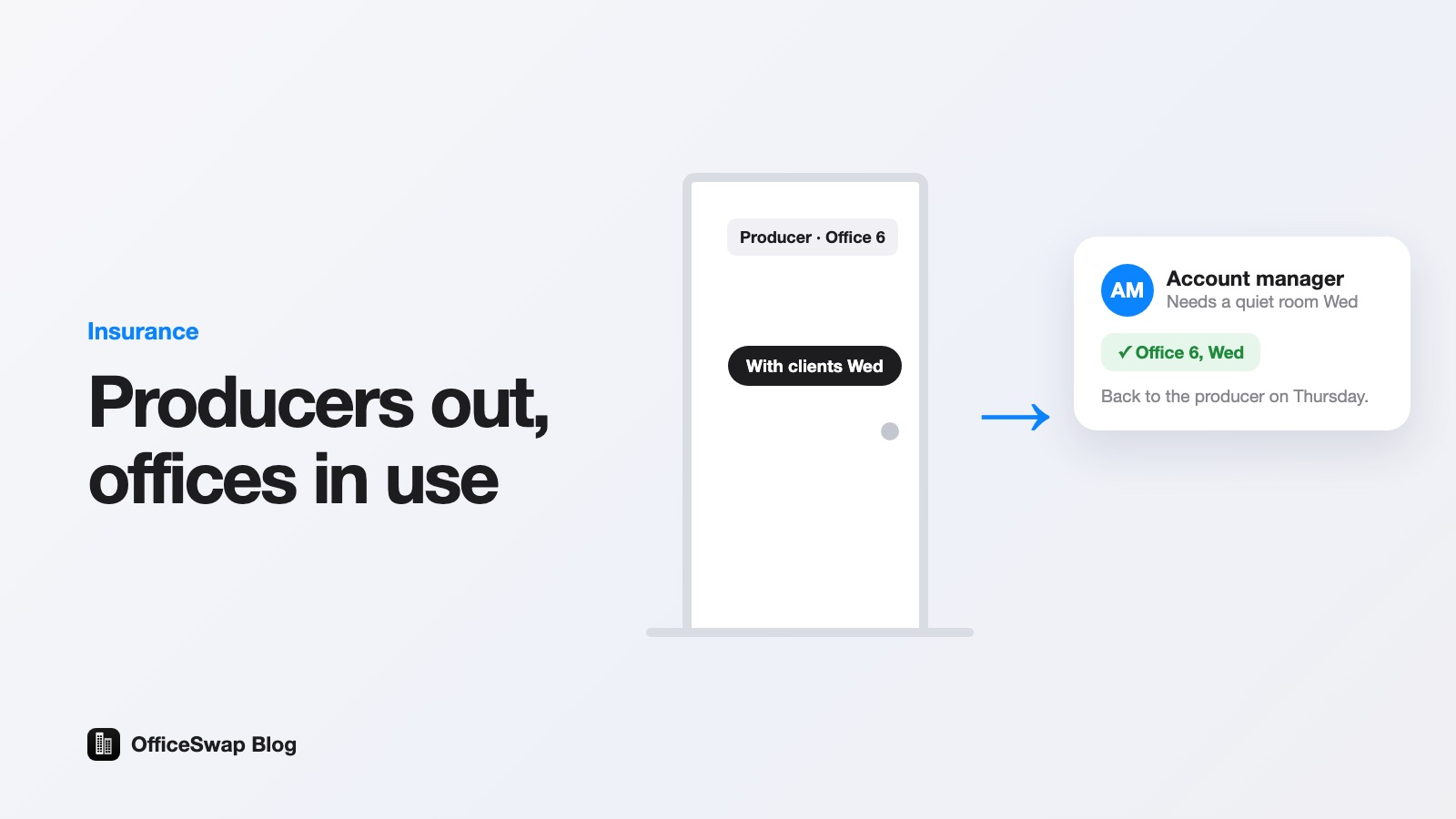
For those firms, a better fit is reverse hoteling. The office stays assigned to its holder. They release it for the days they're away, and a colleague can book it only for those days. The holder never loses the office.
The benefits of office hoteling
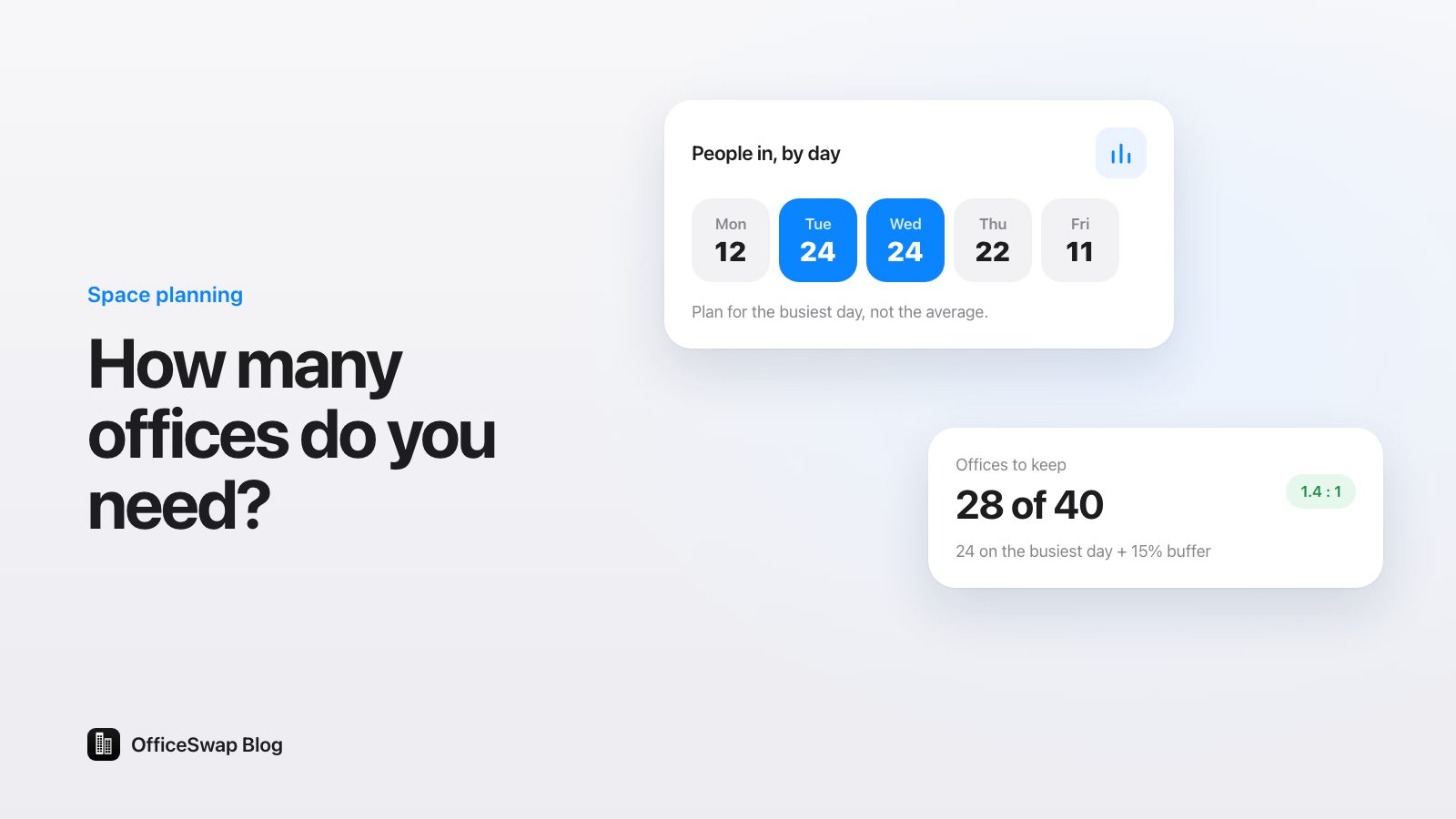
- Less wasted space. You stop paying for rooms that sit empty on the days people are elsewhere. Estimate what yours costs.
- People know where they'll sit. Booking ahead means no hunting for a free room on arrival.
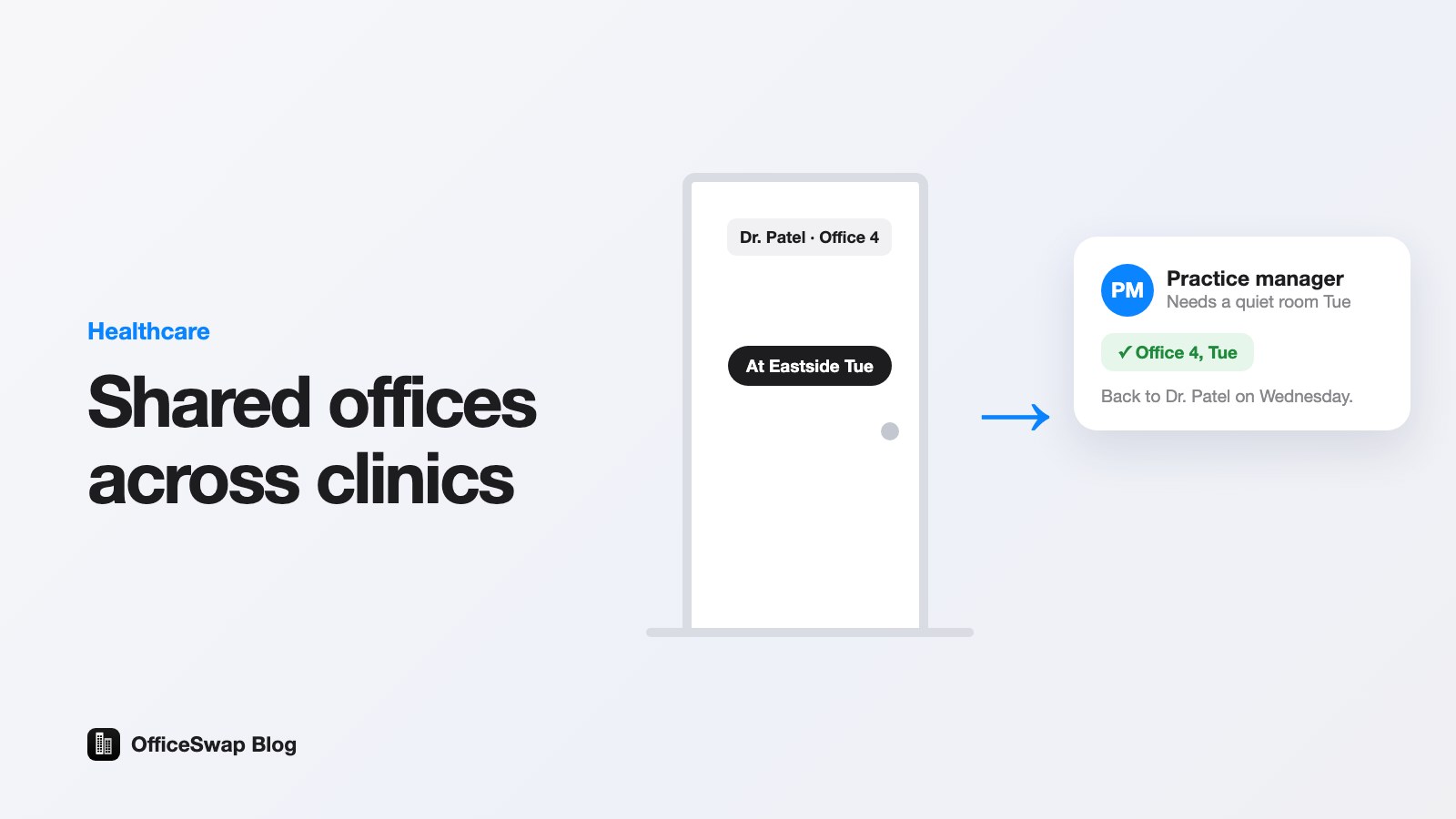
- Visitors are easier to place. Colleagues from another location can request a space before they travel. See desk space for employees visiting another branch.
- Data on how space is used. You can see which offices are rarely used before making decisions about leases. See how to measure office use without sensors.
What to watch for
- Fairness. People need a simple rule for who gets a space. First come, first served, with a waitlist, is easy to explain.
- No-shows. A booking nobody uses wastes the space. Easy cancellation, and optional check-in, help.
- Personal belongings. Agree what's left in a shared space and what isn't. Our etiquette guide has simple rules.
Try hoteling for private offices
OfficeSwap is hoteling software for firms with private offices. Office holders offer their office for the days they're away, colleagues request one, and it's matched automatically. You can look around first with the demo (no signup), or start a 30-day free trial.
From the OfficeSwap blog: officeswap.co/blog/what-is-office-hoteling/