 OfficeSwap
How to Reduce Office Lease Costs Without Moving: A Guide for Firm Administrators

Rent is usually one of a firm's biggest fixed costs, and it is paid whether or not anyone is in the room. If you manage the office, you're probably being asked a version of the same question: can we spend less on space?
Moving is the dramatic answer, and often not an option mid-lease. This guide covers what you can do without moving. It isn't legal or real estate advice; for the lease itself, work with your broker and your lawyer.
Step 1: find out what is actually empty
Most firms know their headcount and their square footage. Few know how many private offices sit empty on a given Wednesday. Badge swipes tell you who came in, not which rooms were unused.
Start by counting private offices and noting how often each holder is away: travel, client visits, vacations, remote days. Our free empty office cost calculator turns a few rough numbers into office-days and a cost, entirely in your browser. For a worked example, see how to calculate the cost of empty offices.
What not to do
Resist the urge to act on a hunch. Taking offices away from people because they "look" empty creates resentment, and it can leave you short on the one day a month when everyone is in. Reassigning offices on a guess is also hard to undo. Evidence first, change second.
It also helps to talk to the people involved. Ask office holders how many days a week they really need their office, and whether they'd lend it on the days they're out. Most are fine with lending when they stay in control.
Step 2: put empty offices to use
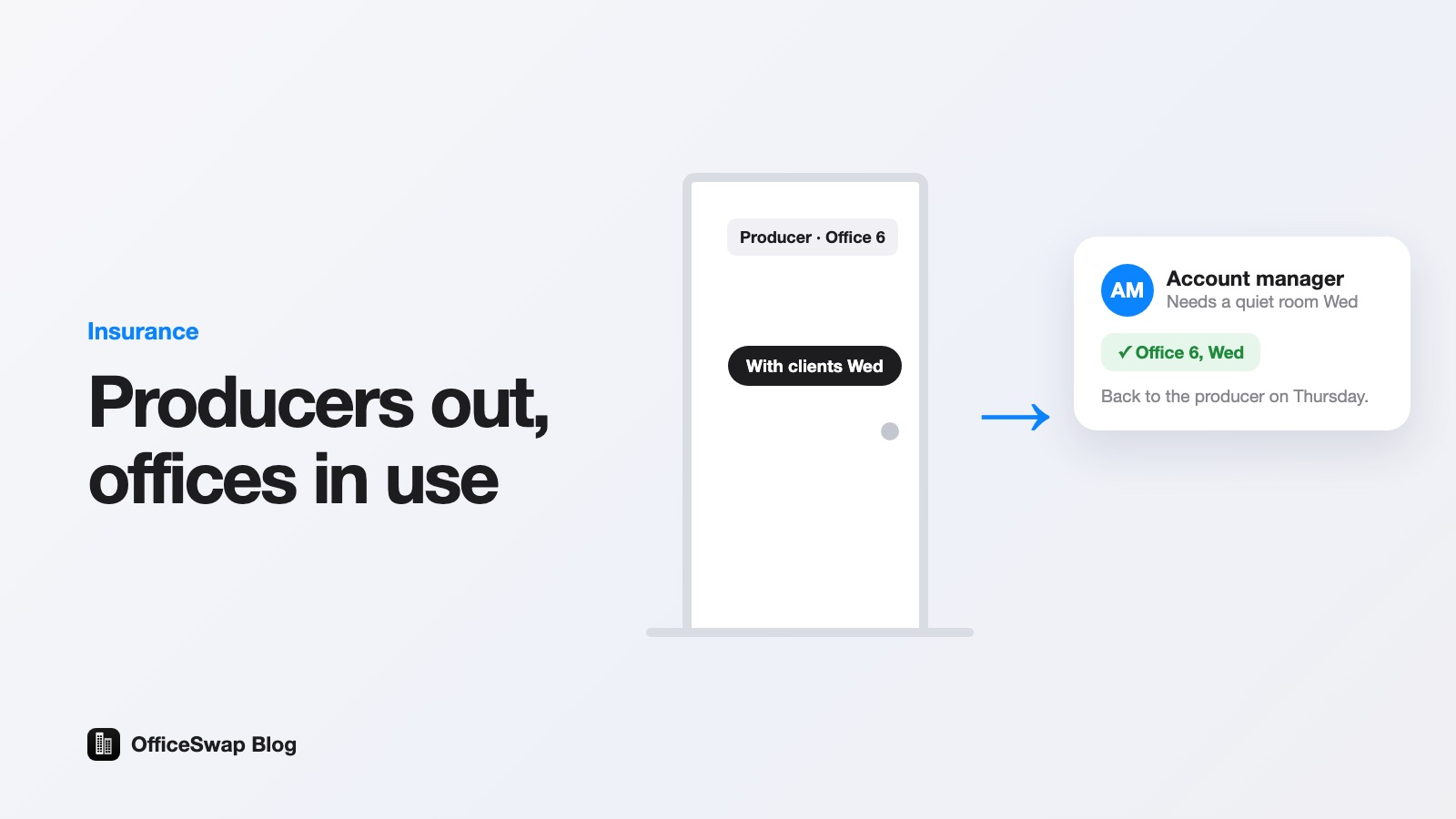
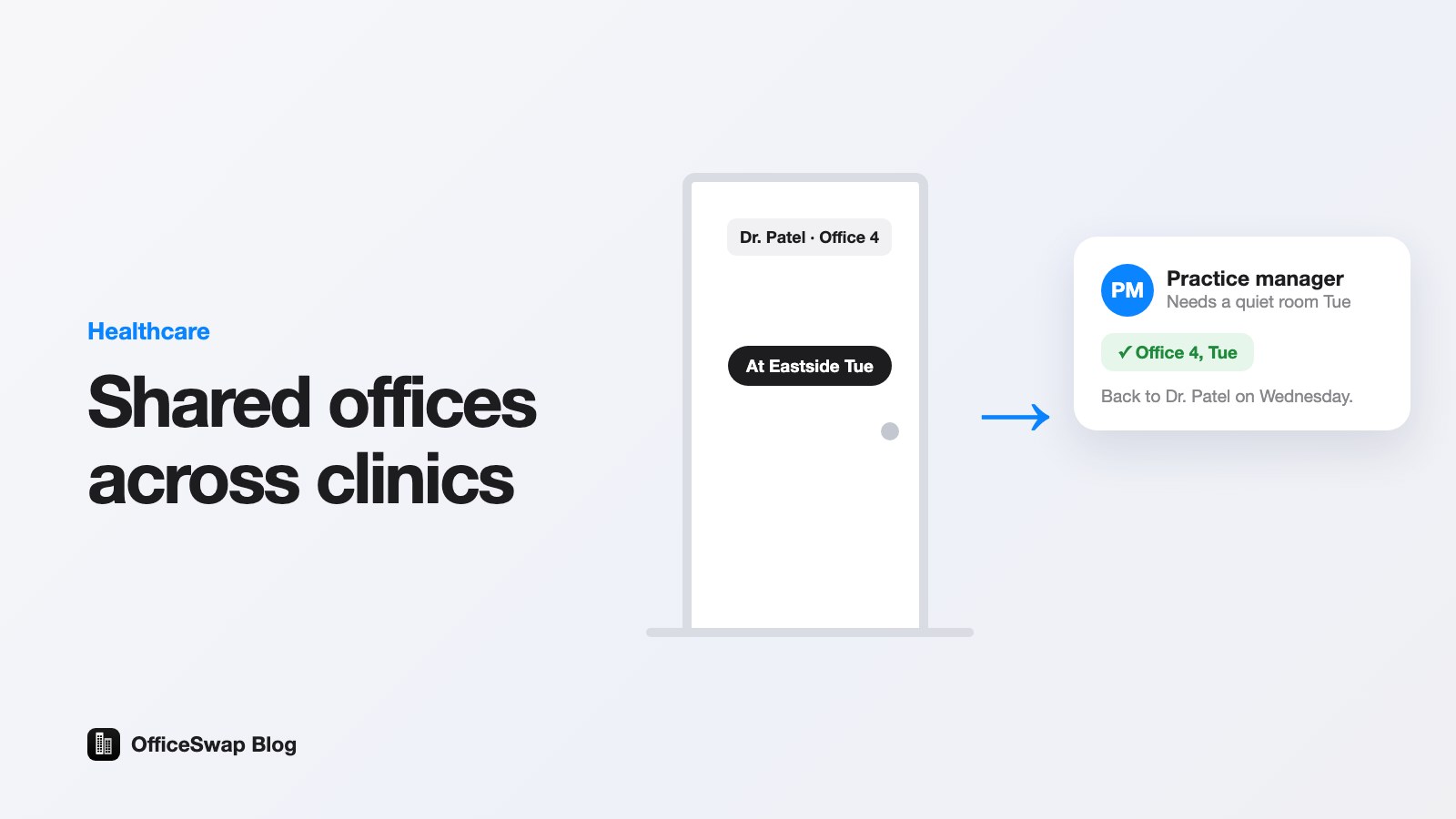
Once you can see the gap, close it. If someone is away on Thursday and a colleague is looking for a room on Thursday, matching them costs nothing. That's the idea behind office sharing: office holders lend their office on the days they're out, and everyone else requests one.
The benefit isn't only a lower bill. It's that the next hire, the visiting colleague or the returning consultant doesn't need a new office. You avoid adding space you don't need.
Step 3: measure without installing anything
You don't need sensors to know how offices are used. If requests, offers and assignments are all recorded as people go about their week, usage is a by-product. In OfficeSwap, admins see this in Insights: an office health score, empty offered days, how often requests get filled and the busiest day. Read more in how to measure office utilization without sensors.
Treat the savings estimate in the app as a starting point, not a promise. It's worked out from your own booking data.
Step 4: plan for your peak, not your average
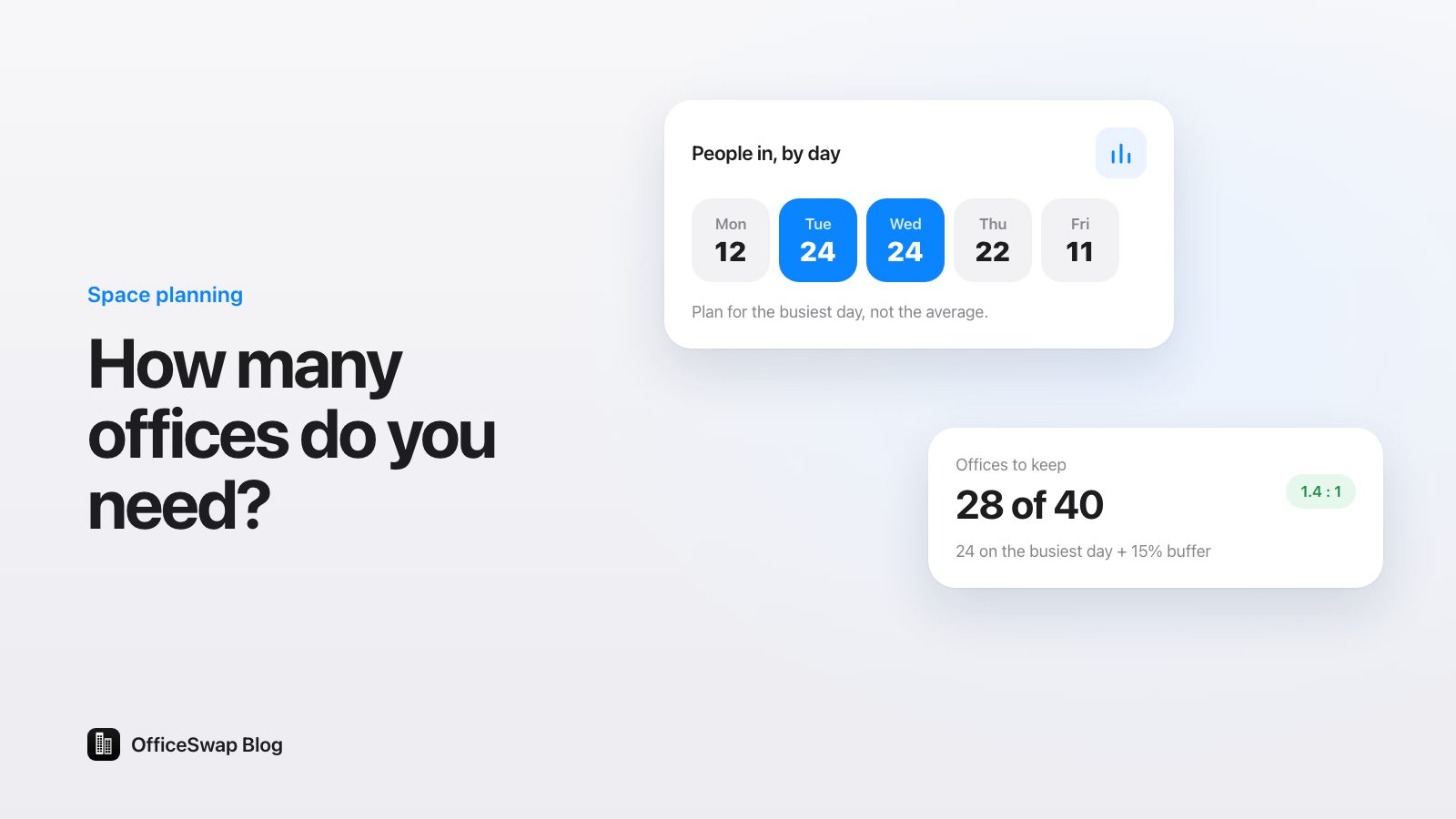
If Monday and Friday are quiet and Tuesday to Thursday are full, you need enough space for Tuesday. Look at the busiest day over several months, and at requests that went unfilled. If people all pick the same days, spreading them out can lower the peak. The hybrid office schedule guide covers how.
Step 5: use the evidence before renewal
A lease renewal is the moment to change your footprint. Check your lease for notice dates now, and aim to have several months of real usage before the conversation. Bring numbers, not hunches, to your broker: offices used, offices empty, your peak day. Our lease renewal checklist walks through it.
What you decide with that data is up to you and your advisors. Some firms will keep their space and fit more people into it. Others will ask about a smaller footprint. Either is a better-informed decision than one made on headcount alone.
What it costs to try
OfficeSwap plans start at $299 a month, billed monthly, with no annual contract. Pricing depends only on the workspaces you list. Employees and locations are unlimited, and every plan has every feature and a 30-day free trial. See pricing.
That means you can run a month of real data before deciding anything, and cancel any time before the trial ends if it isn't useful.
A simple plan for this quarter
- Count your private offices and estimate the days each holder is away.
- Run the calculator to see the size of the gap.
- Start a trial and invite a few office holders to offer their away days.
- Review Insights after a few weeks.
- Take the findings to your next space conversation.
Ready to see it? Open the demo with code DEMO, or start your free trial.
From the OfficeSwap blog: officeswap.co/blog/reduce-office-lease-cost-without-moving/